Every serum advertisement shows the same trick: a frayed end, a drop of product, and an end that suddenly looks whole. What the camera does not show is the next morning. The coating has worn, the split is still split, and the hair knows it even if the mirror is briefly fooled. A split end is physical damage to the hair shaft, and the only real fix is removing it.
That is not bad news once you learn the practical side of it, which is what this how-to covers: how to spot splits, how to slow them, and how a small, regular trim at a salon like Dominican Beauty in Kannapolis, where haircuts and trims are a core service, protects length instead of taking it.
Do it yourself: spotting and slowing splits
- Inspect the last inch in good light. Hold a section of hair against a dark background if your hair is light, or a light background if it is dark. Look for ends that split into a Y, thin white dots at the tips, and single hairs that look thinner and rougher than the hair above them.
- Run the tangle test. If your hair detangles easily at the top but knots stubbornly in the last two inches, the ends are the problem area. Tangles concentrate where the cuticle is frayed, because rough surfaces grip each other.
- Change how you dry. Squeeze and pat hair with a towel or soft T-shirt instead of rubbing. Friction from rough toweling is a daily, invisible source of end damage that costs nothing to fix.
- Detangle wet hair the gentle way. With conditioner in, work from the ends upward with fingers or a wide-tooth comb, in sections. Never rip a brush from root to tip through wet hair, which is when hair stretches and snaps most easily.
- Lower the heat and use protectant. Moderate iron and dryer settings, applied to fully dry hair for irons, slow the end damage that heat causes. The ends are the oldest hair and have the least tolerance left.
- Retire the tight, same-spot ponytail. Elastic friction in one place every day wears a weak band into the hair. Vary placement, use soft ties, and give hair loose days.
- Condition the ends like it is a job. Leave-in conditioner or a light oil on the last few inches, applied to damp hair, reduces the friction that makes existing splits travel faster between trims.

Where the professional line is
Everything above is maintenance, and maintenance buys time. It does not remove a single existing split. The professional step is the trim itself, and the skill in it is judgment: a stylist can read how high the damage has traveled, distinguish splits that a dusting will clear from ends that need a real cut, and shape the result so it grows out well. That assessment is hard to do on the back of your own head, which is why home trimming so often either takes too little, leaving splits behind, or unevenly takes too much.
Be precise when you sit down. Saying you want the minimum off, and that you are coming in regularly for exactly that, gets a different cut than a vague request. A dusting of an eighth to a quarter inch, done every couple of months, clears new splits while they are still shallow. Left for half a year, the same hair may need inches removed, not because the stylist wants to, but because that is where solid hair now starts.
Why waiting always costs more length
A split end does not stay at the tip. It catches on other hairs, on brushes, and on collars, and each snag extends it upward while the weakened section breaks more readily. Damage compounds, quietly, at roughly the same time your hair is growing about half an inch a month from the root. Neglect therefore runs two losses at once: growth you are gaining at the top is cancelled by breakage at the bottom, so hair appears stuck at one length. Regular small trims reverse the equation. Ends stop breaking, growth accumulates, and hair gets longer on exactly the schedule people think trimming prevents.
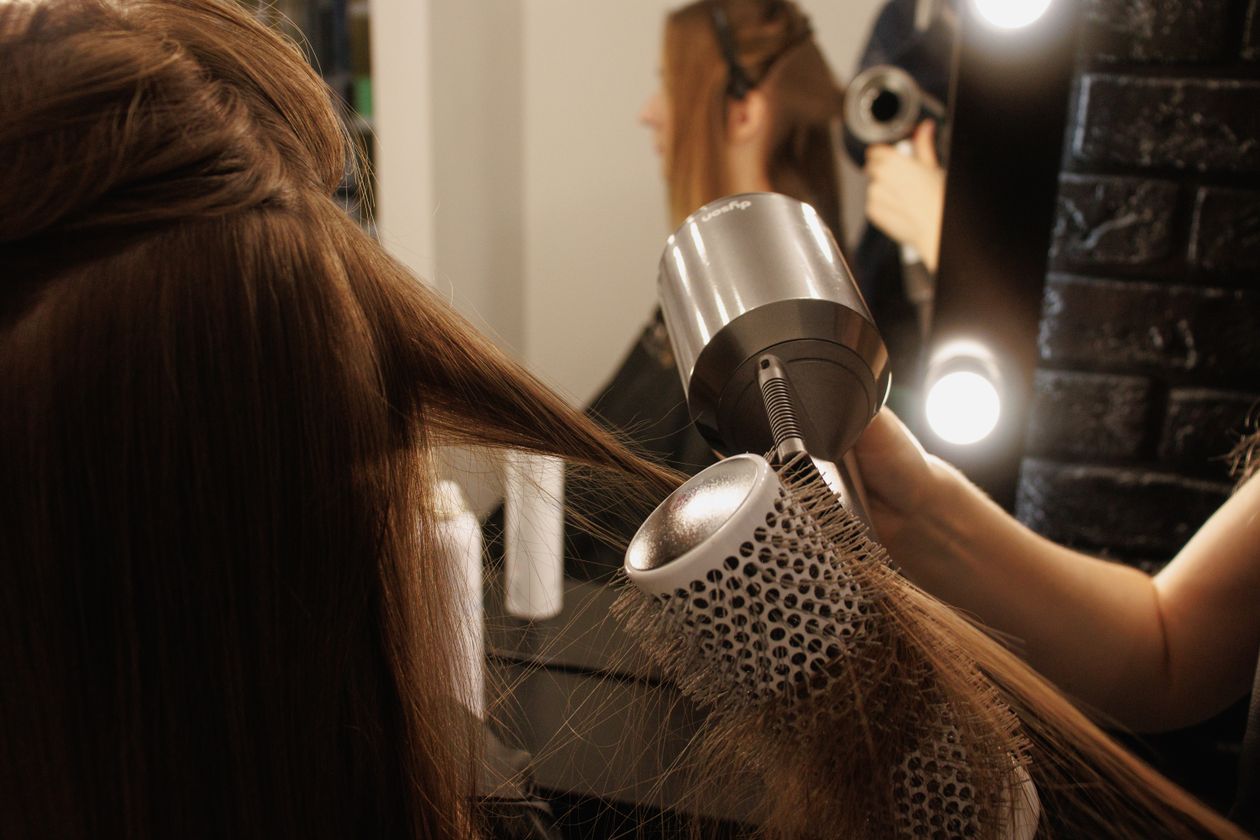
This is doubly true for hair that is colored, lightened, or regularly heat-styled in Kannapolis summers, and for hair worn in wash and set or blowout styles where smooth ends are the whole look. Frayed ends will not lie smooth no matter how good the blowout is; the style is only ever as clean as the ends it is built on.
A trim rhythm that works
For most people, every eight to twelve weeks keeps ahead of the damage; hair that is lightened, fine, or heat-styled daily belongs at the shorter end of that range. Put the appointments on the calendar as standing maintenance and the whole subject shrinks to a minor habit. The clients with the longest healthy hair are rarely the ones who never cut it. They are the ones who cut it a little, on time, every time.
Common questions
Can oils or serums seal a split end permanently?
No. They coat the end so it looks and feels smoother temporarily, and they reduce friction that makes splits worse. The split itself remains until it is cut off.
How much hair has to come off to fix split ends?
Only as much as the damage has traveled: a light dusting if splits are caught early, or a few inches if they have been climbing for months. An honest stylist will show you where the healthy hair starts.
What is a dusting, and should I ask for it?
A dusting is the smallest trim that clears the damaged tips, often an eighth to a quarter inch. It suits anyone growing their hair out who wants maintenance without a visible length change.
Photos in this guide are representative stock images.
← All guides from Dominican Beauty← Back to Dominican Beauty